Old Satellite Images: Where to Find Historical Imagery Since 1972
Where to find old satellite images, free and commercial. Archives run back to Landsat-1 in 1972, with sources, resolutions and coverage for each.
Summary
- Free optical archives start in 1972 with Landsat-1, at 30 m resolution. That is the deepest continuous record of the Earth’s surface available to anyone.
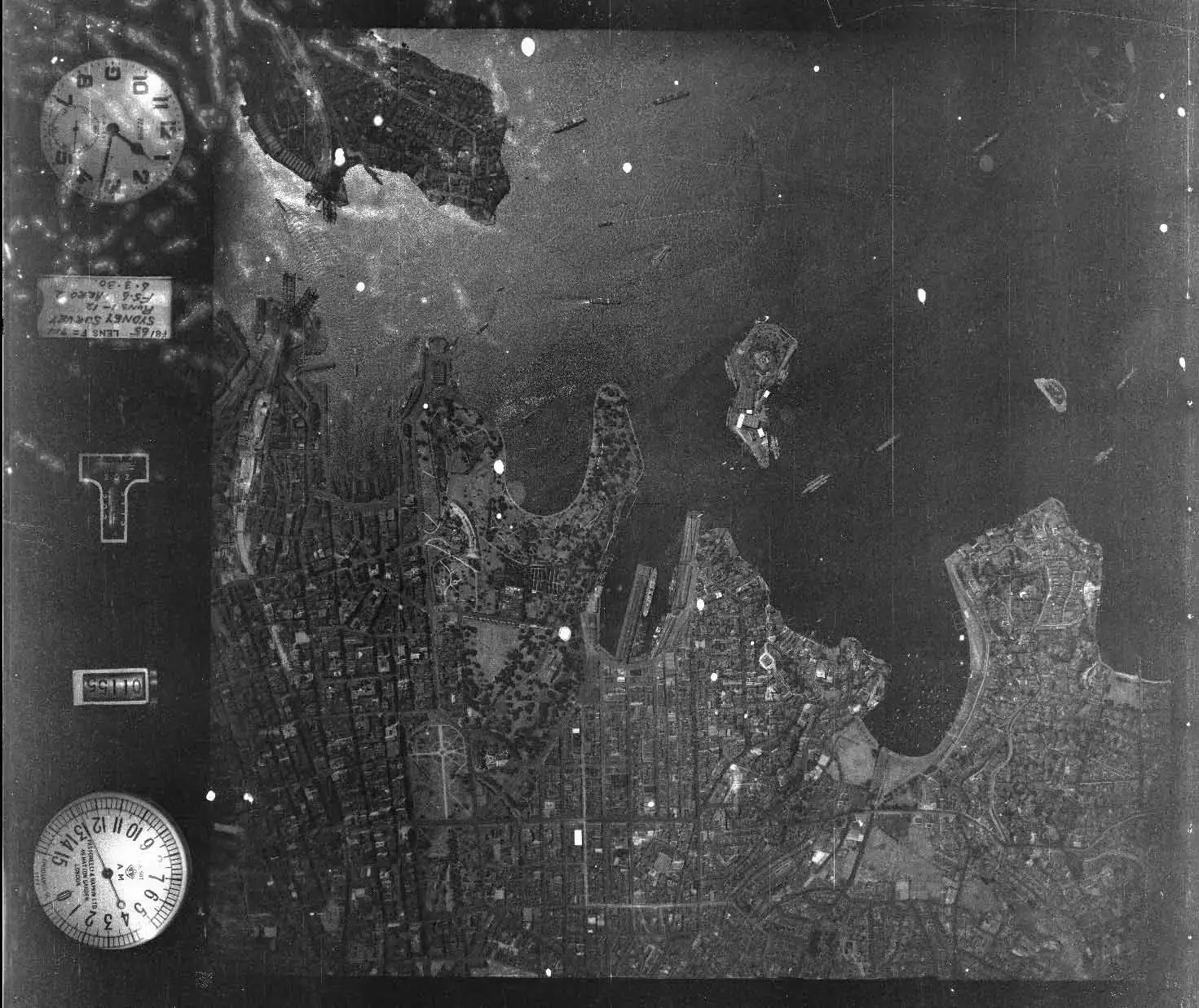
- Aerial photography goes back further than satellites do. National archives in several countries hold film surveys from the early twentieth century.
- Commercial archives are shallower, starting around 1999, but they resolve at 0.3 to 2 m instead of 30 m.
- Which one you need depends on the question. Landsat answers “how has this landscape changed since the seventies”. It cannot tell you what was standing on a single lot in 2005.
Where to Find Old Satellite Images
Old satellite images come from three kinds of archive. Government programmes such as Landsat and Sentinel give away moderate-resolution imagery going back to 1972, free and without registration limits. National mapping agencies hold scanned aerial film that predates satellites entirely. Commercial operators sell high-resolution archive captures from roughly 1999 onward, priced by area.
The rest of this post covers what each archive holds and where the boundaries sit.
A Timeline of Old Satellite Images
The Landsat programme has been returning imagery for more than fifty years, which makes it the longest continuous record of the Earth’s surface anyone has. The oldest images date to 1972, when Landsat-1 launched.
Eight more Landsat satellites have followed, operated by USGS and NASA, each revisiting a given location every 16 days. Landsat-7 launched in 1999 and Landsat-8 in 2013. Landsat-9 joined them in 2021. Landsat 1 through 5 have finished their missions, but their data stayed in the public archive, which is why the record is continuous rather than a set of disconnected snapshots.
Other programmes filled in around it. Terra and Aqua carry NASA’s MODIS instruments, launched in 1999 and 2002. ESA’s Sentinel-2 has been returning 10 m optical imagery since 2015, and Sentinel-1 adds radar that works through cloud and at night. CBERS, a joint Chinese and Brazilian programme, covers South America in more detail than the global missions manage.
Why Are Old Satellite Images Black and White?
Most satellite imagery starts as a set of separate greyscale band measurements, one per wavelength the sensor records. Colour appears when those bands are combined. Natural colour imagery maps the red, green and blue bands to what the eye expects. False colour imagery assigns visible colours to bands such as near infrared, which is why healthy vegetation shows up bright red in a lot of older published imagery.
Free Sources of Old Satellite Images
Several public archives cost nothing to search and nothing to download.
USGS EarthExplorer is the main one. It holds the full Landsat record back to 1972, plus declassified reconnaissance imagery and decades of aerial photography. Registration is free.
Copernicus Data Space Ecosystem carries Sentinel-1 and Sentinel-2 data from 2014 onward at 10 m. Shallower than Landsat, but sharper and more frequent.
Google Earth has a historical imagery layer with a time slider. It is the fastest way to eyeball how a location changed, though you cannot export the underlying pixels for analysis.
Historic Aerials covers the United States with aerial photography going back decades, viewable by year.
National mapping agencies hold the oldest material of all, because aerial survey predates satellites. Geoscience Australia publishes a collection of historical aerial imagery, and Queensland’s QImagery serves scanned state film. Most countries run an equivalent. It is worth checking the national agency before assuming imagery does not exist.
The limit on all of these is resolution. Landsat pixels are 30 m across, so a pixel covers roughly a tennis court. That answers questions about land cover, fire scars, water extent and urban sprawl. It will not tell you how many vehicles were parked at a site, or whether a particular roof had been replaced.
Commercial Archive Imagery
Commercial archives trade historical depth for detail. They start around 1999 rather than 1972, and they resolve at 0.3 to 2 m per pixel rather than 30 m.
Geopera’s Pera Portal sells from that archive. You draw or upload an area of interest, set a date range, and see what exists over it along with the price before you commit. Pricing is by area rather than by capture, so pulling several dates over the same footprint, which is what change detection actually needs, does not multiply the cost the way per-scene pricing does.
The archive draws on several operators, including the Maxar WorldView constellation, the SuperView series, CGST at 50 cm and 75 cm, and SIIS KOMPSAT. Every order runs through the same processing chain before delivery, so captures from different sensors and different years arrive in a state where you can compare them directly. For what the tiers actually cost, see the satellite imagery cost guide.
What People Use Old Satellite Images For
Environmental monitoring and disaster assessment. Fire scar mapping, flood extent reconstruction, coastal erosion measured across decades, and drought cycles. Insurers and public agencies use before-and-after pairs to establish what conditions were like prior to an event.
Urban development and planning. Tracking how a city expanded, when infrastructure went in, and where natural land was converted. Planning disputes often turn on what was on a site at a particular date, and an archive capture with a timestamp settles the question.
Mining and resource management. Documenting site conditions over time, establishing pre-disturbance baselines for rehabilitation, and keeping a dated record for regulators. Rehabilitation reporting in particular needs a credible picture of what the ground looked like before work started, which is difficult to reconstruct once the record is gone.
Due diligence and baselines. Property and land assessment before acquisition, environmental impact studies that need a documented starting condition, and carbon stock assessment, where the accuracy of the baseline drives the accuracy of everything calculated from it.
Choosing Between Free and Commercial
Start free. If Landsat or Sentinel answers the question, there is no reason to pay, and the historical depth is better than anything commercial.
Move to commercial archive when the question needs detail that 30 m cannot resolve, when you need a specific date rather than whatever the free satellite happened to catch, or when the imagery has to support a claim in front of a regulator, an insurer or a court, and the provenance has to hold up.
Most projects end up using both: free imagery to establish the long arc, commercial captures at the few dates that matter.
You can search the commercial archive at portal.geopera.com, or email [email protected] with the area and dates you are after.