
GeoEye-1
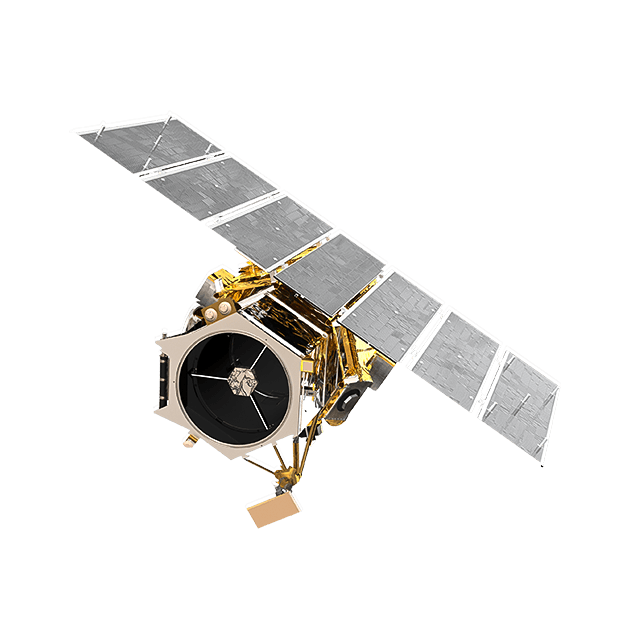
GeoEye-1, which was launched in 2008, is a satellite that captures panchromatic and multispectral imagery for a variety of purposes.
Technical specifications
What you can do with GeoEye-1
Detail at 50cm GSD
At 50cm GSD, vehicles are countable, and building outlines, road furniture and single trees stay distinct. The panchromatic band carries that geometry, and the 2m GSD multispectral bands are pansharpened against it, so colour products hold the same detail.
Standard index bands
Blue, green, red and near-infrared cover the everyday products: true colour, colour infrared, and the indices built from red and near-infrared (NDVI) or green and near-infrared (NDWI). Those index rasters carry the 2m GSD multispectral sampling, not the 50cm GSD panchromatic figure.
One satellite collecting
Collection rests on a single spacecraft, so opportunities arrive on its orbit rather than on demand. As stated by the supplier: 350,000 km² per day of collection capacity. A large area of interest competes for that capacity with everything else in the queue.
Stereo for elevation
Stereo pairs are collectable, so elevation comes out of the imagery itself instead of a global model: building heights, stockpile and pit surfaces, the shape of structures on the site you ordered.